
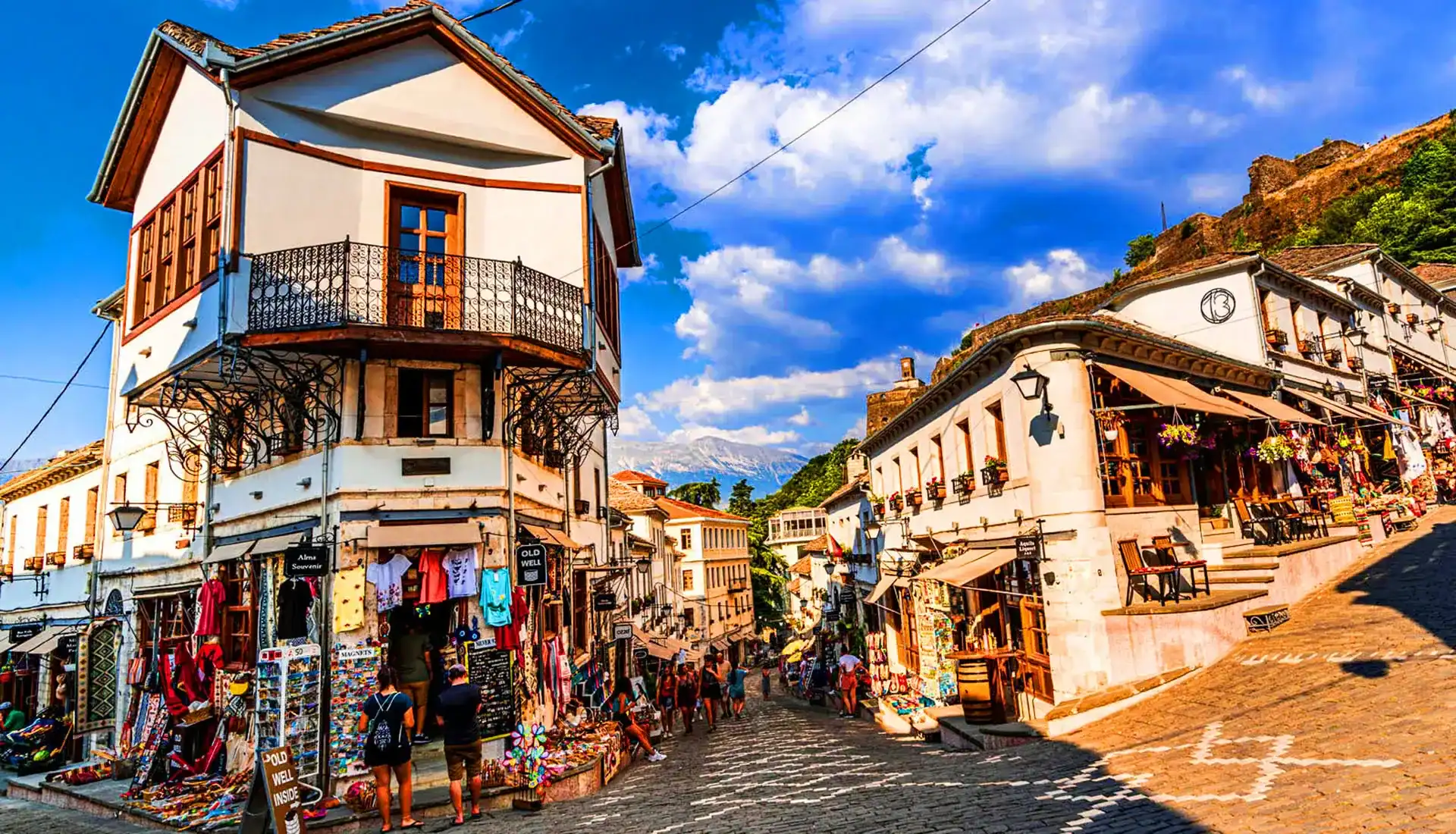
Stone roofs, tower houses and a mighty castle above the Drino valley – welcome to Gjirokastër, the city of stone
Last updated: November 2026
Gjirokastër is one of the best-preserved Ottoman-era towns in Albania and a UNESCO World Heritage site. Its grey stone houses with slate roofs climb the slopes of Mali i Gjerë, crowned by a huge castle with views over the green Drino valley. With its old bazaar, tower houses, museums and delicious traditional food, it is a key stop in southern Albania.
History & Culture
Gjirokastër has been an important city for centuries, and in 2005 it was added to the UNESCO World Heritage List, a listing later extended to Berat in 2008. Its castle is one of the largest in the Balkans and today holds an armaments museum, old cannons and the stage of the National Folklore Festival, the national festival of Albanian folk music, dances and costumes. Below the castle, the stone bazaar is full of craft shops and cafés, while the old tower houses, like Skenduli and Zekate, show how the great families of the city once lived. Gjirokastër is also the birthplace of the famous writer Ismail Kadare, whose family house is now a museum. Under the town, a long tunnel built during the Cold War can be visited today with a guide.
Things to do in Gjirokastër
Gallery
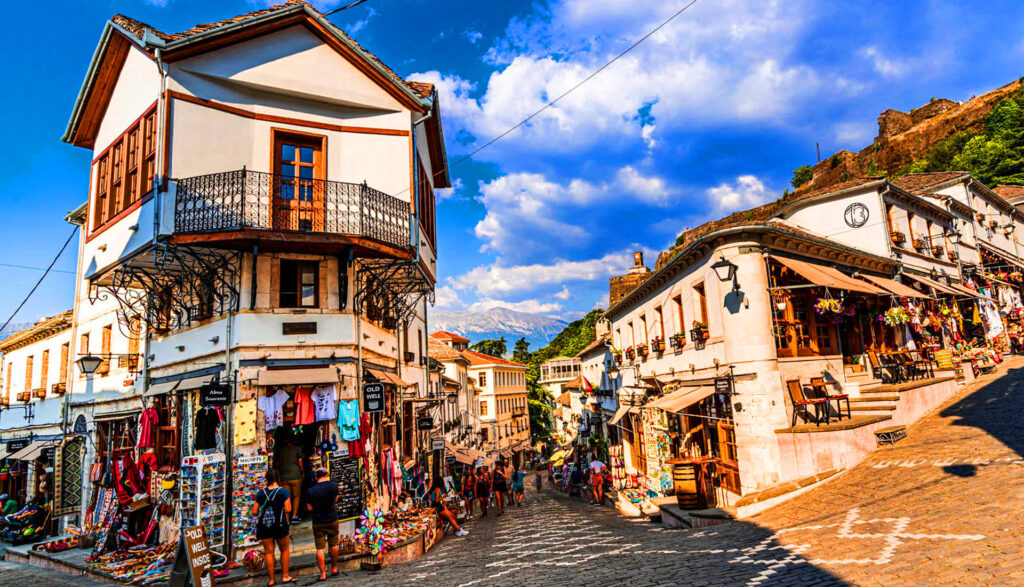
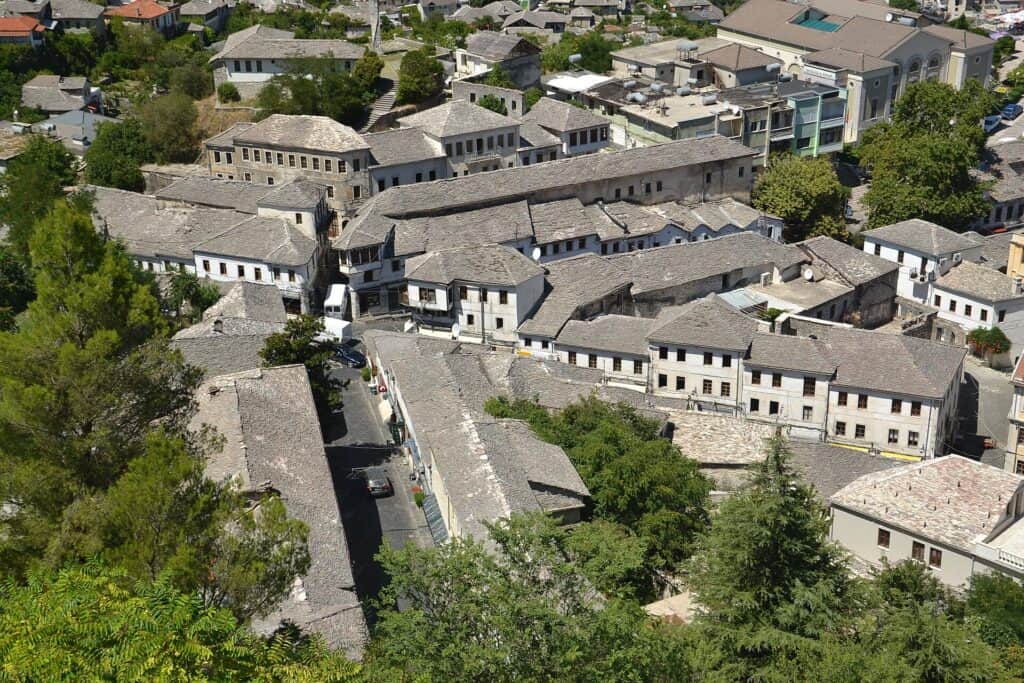
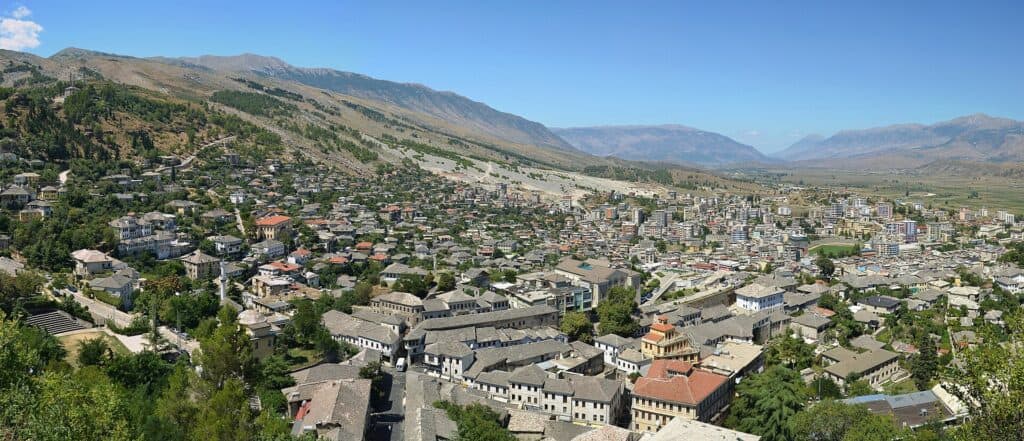
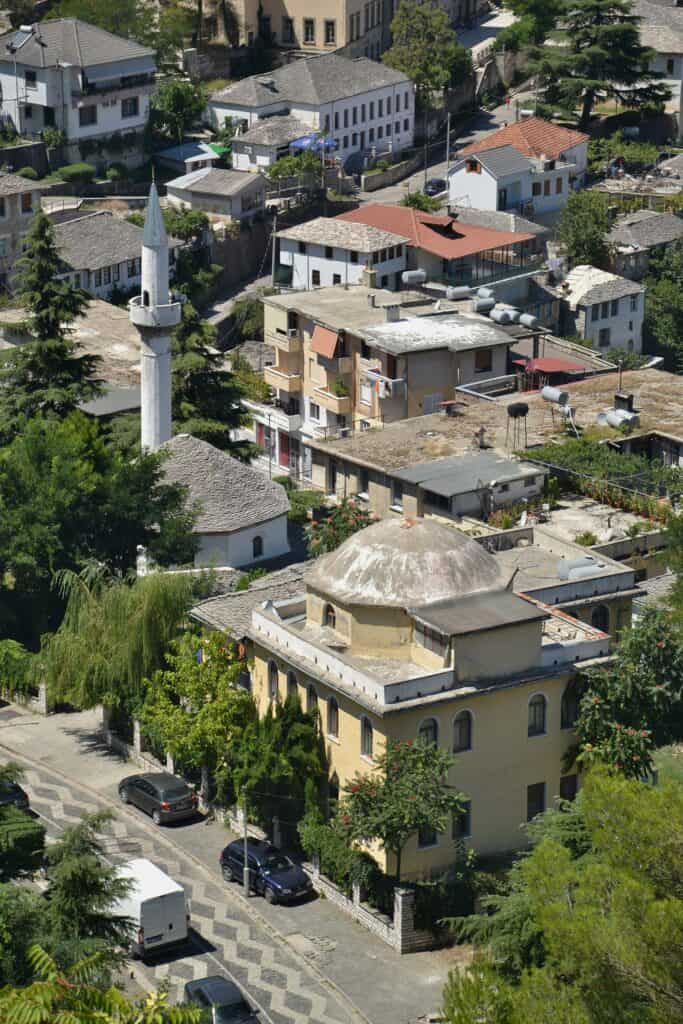
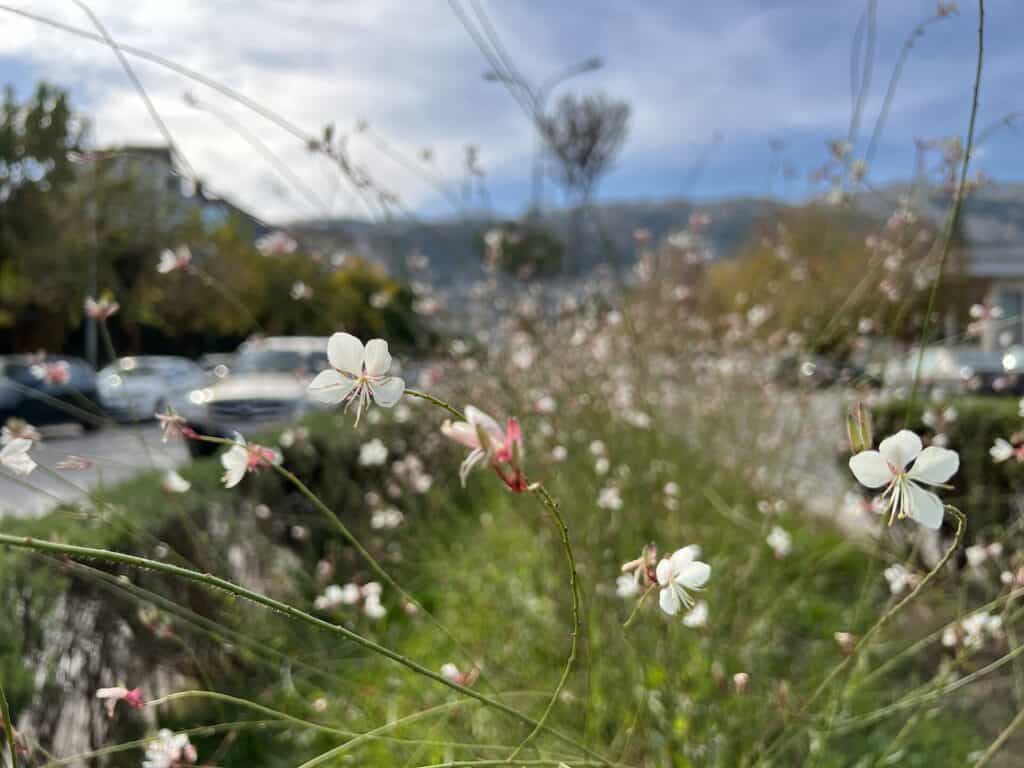
Photos: Sharon Hahn Darlin (CC BY 2.0); Pudelek (CC BY-SA 4.0); Pudelek (Marcin Szala) (CC BY-SA 3.0) – via Wikimedia Commons
Nature & Parks







Food & Drink
Gjirokastër has its own special cuisine, loved all over Albania. The most famous dish is qifqi – rice balls with fresh mint and herbs, fried in a special pan – but you should also try shapkat (cornbread with greens), pasha qofte, lamb with yoghurt, and oshaf, a sweet dessert made with sheep’s milk and dried figs. The surrounding mountains give excellent cheese, honey, mountain tea and homemade raki.
The Old Bazaar is the heart of Gjirokastër’s social life. Its small cafés and terraces are good for a coffee between the shops, and in the evening the restaurants of the bazaar fill with locals and visitors enjoying traditional food with views of the stone roofs and the valley. The new town in the valley also has modern cafés and bars.
Frequently Asked Questions
How much is the ticket for Gjirokastër Castle?
The castle ticket is 400 lek for adults, with reduced prices for students and pensioners and free entry for children under 12. Some museums inside, such as the Armaments Museum, charge a separate small fee.
How long should I spend in Gjirokastër?
Plan one full day: 1.5–2 hours for the castle, then the Old Bazaar and a traditional stone house. Staying overnight lets you enjoy the old town in the quiet evening.
Is Gjirokastër suitable for visitors with limited mobility?
It is challenging. The old town is built on a steep hillside with cobbled streets that can be slippery. Taxis can take you up to the castle.
Can I visit Gjirokastër as a day trip from Sarandë?
Yes, it is about 1 hour by car or bus. You can stop at the Blue Eye on the way.
What is the Cold War Tunnel in Gjirokastër?
A large communist-era bunker built under the town. It can be visited on guided tours with a ticket.
Practical Information
Getting there
- From Tirana: About 3–3.5 hours by car. Regular buses and minibuses run from Tirana.
- From Greece: The Kakavijë border crossing is about 30 minutes away.
Getting around
- On foot: The old town is built on a steep hill with cobbled streets – wear good shoes.
- Taxis: Useful for the climb from the new town to the bazaar and the castle.
Where to stay
- Old town: Guesthouses in restored stone houses around the Old Bazaar.
Good to know
- Steep streets: the old town is built on a hillside of polished cobbles – shoes with good grip matter, especially after rain.
- Two separate visits: the castle and the Cold War tunnel under the bazaar have separate tickets.
- Cash: ticket offices and house-museums usually take only lek in cash.
- Day or night: stay a night if you can – the bazaar is quiet and lovely in the evening, after the day visitors leave.
Weather & seasons
- Summer: Hot, with July and August days often above 30 °C.
- Winter: Mild but wet, with cold nights.
- Best time: April–June and September–October.
Money & connectivity
- Cash: The lek (ALL) is the local currency – carry some cash for cafés, taxis and small shops.
- Cards & ATMs: ATMs are easy to find in the centre; cards are accepted in most hotels and larger restaurants.
- Mobile data: Good 4G coverage in town; local SIM cards and eSIMs are sold in phone shops.
Your Albania trip, arranged by locals
Share your plans with us and we'll help you organise everything for a smoother, more relaxed holiday.